Electric cars – Green Tourism

Writer: Nguyen Manh Tung – ID: 17

Electric cars – Green Tourism

Occurring since July 2010, electric cars are part of the clean transport project in the old quarter of Hanoi, managed by Dong Xuan Joint Stock Company. In the initial stage of development, it can be said that electric cars are very attractive and popular for travelers. There are 500 to 600 tourists per day, even 700 tourists using this service.
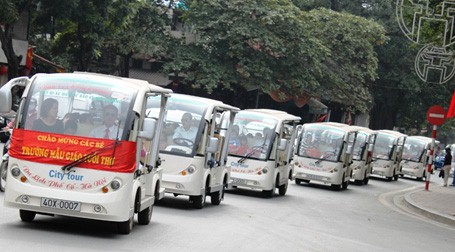
The route of operation of the electric car in Hanoi Old Quarter is about 6.5 km, passing through 28 commercial streets, 13 vocational streets, 22 temples, 9 temples, 3 pagodas, 8 historical relics and regional landscapes around area of Hoan Kiem lake and Dong Xuan market.

On the journey, the visitors will be introduced the history of the name of each street and the landscapes of the Hoan Kiem district in two languages (Vietnamese – English) to adapt the need of visitors that is exploring the cultural history, architecture of the old quarter and a part of daily life of the people in Hanoi.

After 7 years of operation, the image of electric cars running around the old quarters have become a popular means of travel with the capital. No smoke like a motorcycle taxi, not as expensive as pedicabs. Furthermore, last year after “The Walking Street” were officially put into service, green electric cars more became useful when other vehicles were not allowed in and out.

So Why this type of vehicles become a trend/innovative idea in Hanoi??

I can tell you “electric cars” is absolutely brilliant idea. Firstly, it is a vehicle running by electric/solar powered cars; it brings no noise, no dust and especially the green image for Hanoi. Therefore, it is considered as a perfect solution for the environment issues that every country now really cares about. Secondly, thanks to the green image of electric cars, it attracts more tourists to visit Hanoi, especially the Old Quarter. In the year of 2017, electric cars were serving nearly 300,000 visitors to Hanoi ancient streets, and the revenue reached over 8.8 billion VNĐ. In addition, when visitors come to the Old Quarter, Hanoi, they will have to chance to see the culture of Hanoi such as architecture, historical relics, silk, food street…So thanks to electric cars, it not only helps promote tourism, economic development but also preserves Hanoi’s signature culture and spreading the unique culture to foreign visitors.
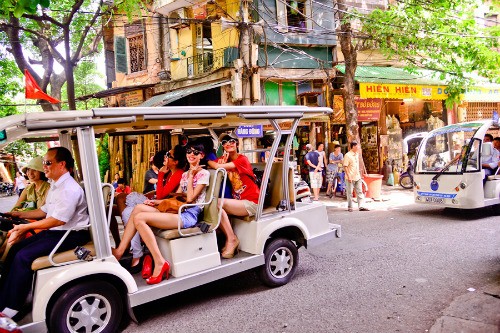
And finally, I really hope that the electric car service will be more and more stable to attract more and more people both Vietnamese and Foreign Visitors, contributing to keeping the peaceful, unique and green image for the old quarter and Hanoi.

Source: http://bnews.vn/tour-tham-quan-pho-co-ha-no-i-bang-xe-dien-hut-khach/51606.html

http://anbico.vn/tin-tuc/xe-dien-du-lich-pho-co-7-nam-nhin-lai/

Writer: Nguyen Manh Tung – Number 17

Innovation in Medtronic’s Business

Writer: Phan Le Vu – ID 20

The article gives an overview about the Medtronic covering a wide range of business groups including Cardiovascular, Diabetes, and Restorative Therapies & Minimally Invasive Therapies with six clear missions and 3 main strategies of Therapy Innovation, Globalization & Economic Value. Through the story of Medtronic, the author would like to answer the question “How to accelerate access to care for the many untreated cardiac patients in Vietnam?” based on the analysis the fact of medical sector in Vietnam, and finally to identify treatment opportunities for Medtronic in Vietnam.

Accordingly, regarding the global growth of Medtronic, the strategy called “Dare to C.A.R.E” impressed me strongly. As mentioned in the article, Dare to C.A.R.E is a continuous approach to manage heart and vascular health in local communities, developed by the Heart Health Foundation in 2000. Refer to the diagram in Exhibit 6, you understand that through the Events & Outreach programs (Patient Enters Program – PEP), after making applications for Dare to C.A.R.E, patients shall be screened and then received the results with clear explanation. If, they get no disease, they shall be eligible for screening in five years and if not, they shall be checked for the best treatment option. This program really motivates patients to take action by educating and engaging them to overcome the diagnostic challenges for vascular disease.

Source: https://bschool.nus.edu/cerebration/2015/medtronic2015.pdf

Case Study: Market Development and Innovation in Vietnam (Celebration 2015 – NUS Business School)

current taxes in Viet Nam: opportunities or threats to innovate ?


Writer of summary – Le Thi Quynh Anh (No:04)Na


That article is about the current taxes in Viet Nam: Taxes are a major source of revenue for the state budget. In Vietnam, there are more than 10 taxes with different tax rates. In fact, there are areas in which businesses have suffered from 12 to 15 taxes and fees, resulting in reduced contributions to the state budget. At the same time, Vietnam is one of the countries with income from people on the total income of the society is very high compared to other countries with the same level of income and development level. Together with other economic policies, tax policies can become a tool to support domestic businesses as well as attract international investment. In other words, taxes can become a “competitive tool” at the government level. The government will have preferential tax policies for sectors, occupations, sectors and objects that are encouraged to develop through different taxes or rates.
Therefore, when we set up a business, we need not only to thoroughly research economic policies and laws but also to thoroughly research tax policies to take advantage of and exploit the incentives.
For example, when we want to implement an agricultural project, we will consider high-tech agriculture for export. In this area, we will enjoy preferential value added tax, corporate income tax, natural resource tax, etc. We also enjoy preferential interest rates from banks for this field.
In addition, each country will have different tax policies. In the integration period, many companies earn high profits through their subsidiaries established in the “tax haven” and investment back into Vietnam, profit earned them transferred to the company located in the country level. Low taxes to “spleen” much higher taxes if left in Vietnam.
Finally, the law sometimes has a loophole and tax law is no exception. If the company understands the tax law, it will increase profits by saving the maximum amount of remittances into the state budget.


Reference source: https://www.google.com.vn/search?q=c%C3%A1c+lo%E1%BA%A1i+thu%E1%BA%BF+%E1%BB%9F+Vi%E1%BB%87t+nam&rlz=1C1EJFA_enVN782VN782&source=lnms&tbm=isch&sa=X&ved=0ahUKEwiqj6bp1pLZAhVIL48KHYL0AOwQ_AUIDCgD&biw=1366&bih=662#imgrc=Pkmb84VypH2FtM:
Kết thúc cuộc trò chuyện

WALKING STREET, AN INNOVATIVE PLACE IN HA NOI

Hanoi is changing. From an unknown city, Hanoi is flipping to another period of time with more development. 2 years ago, Hoan Kiem lake was not crowded, people came here for taking pictures but now it is changing to a very different lake. Management team of this lake decided to build walking street around lake in every weekend. In these days, there are a lot of interesting activities were held. Beside the rule that no bike, no car moving on this road, people also rebuild many traditional games that remind young people about Vietnamese history. Luckily, tourists seem really like those activities. This is a good way to connect people with many different ages.

This picture proposes one typically example. That kids enjoy playing “Ô ăn Quan”. This is a very familier game when I was young. Even now when I go back to my hometown, there are very few kids know how to play this game.
I was so supprised when I saw those kids, who living in big cities, can play together with a very exciting attitude.
I hope this kind of street can open more in other cities such as Da Nang, Ho Chi Minh, Hue… where people can enjoy culture space.
Ha Noi 06/02/2018
Nguyen Que Huu

Changing the lives of poor children – Koto case study

NGUYEN HOANG LONG – ID: 13

 Innovative management contributes to changing the lives of poor children in the case of KOTO (Hanoi).

    Analysis of the interest of this article for innovation in Hanoi

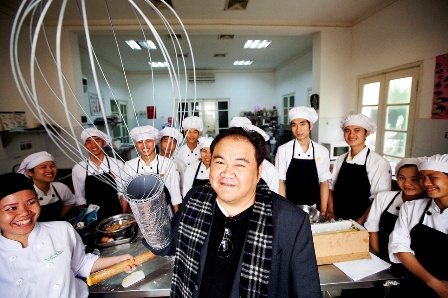
KOTO is known as one of the strong social enterprises with great influence in Vietnam today. This social enterprise was founded in 1996 by Jimmy Pham in Hanoi. KOTO has become a trusted address for poor and underprivileged children in society, which gives them the opportunity to learn cooking skills to build a solid foundation for the future. KOTO is recognized as one of the first social enterprises to register successfully under the social enterprise registration system, which is registered under the Enterprise Law of Vietnam in 2014. KOTO’s revenue is derived from the profits of two restaurants in Hanoi and Ho Chi Minh City. The profit of this business is devoted to cooking and providing free living services to trainees. In addition, KOTO has established KOTO Vocational Training Center, which is known as one of the non-profit centers with the goal of supporting vocational training for poor children. Specifically, within 24 months, students will learn skills to serve in the field of restaurants and hotels, specialized English and life skills. Moreover, practitioners are also periodically examined for health. KOTO’s trainees are successful in the field of food and they have changed their lives through their hard work and their effort.  KOTO’s efforts are aimed at bringing new life to poor children and it will expand other facilities to increase profitability and achieve humanitarian goals in Vietnam.

                   Jimmy Pham – KOTO Founder and Global Ambassador and KOTO’s trainees.

Source: http://www.koto.com.au/

Writer: Nguyen Hoang Long – ID: 13


Innovative start-up ecosystem

http://ipp.vn/wp-content/uploads/2016/09/IPP-Banners-1.png

The foreign businesses are still optimistic about the prospects for business development in Vietnam. However, they also expressed concern over recent changes in policies and regulations that are inconsistent with international practices. They often face to complex policy implementation, ineffective and unfair treatment policies across regions. Th To create a favorable environment to promote and development of fast-growing enterprises based on the exploitation of intellectual property, technology, new business models. Vietnamese startup ecosystem is growing rapidly in Hanoi, to become a modern industrialized country by 2020. That is why the government plans to develop a national innovation system that works to support the development of innovation through Startups and SMEs.

The Vietnamese Government issued a project called “Assistance policies on national innovative start up ecosystem to 2025”. The goal of the project is to improve the legal system to support innovative start-up by 2020; set up the National Innovation Innovation Portal; supported by 800 projects, 200 start-up businesses, 50 of which were successful venture capitalists, valued at about VND 1,000 billion. By 2025, support the development of 2,000 innovative projects; assisted in the development of 600 innovative enterprises; 100 enterprises participated in the project to call for investment capital from venture investors, with a total value of about VND 2,000 billion. Some specific support:

  • Building a service center for innovative start up support
  • Partial support funding for training activities
  • To develop facilities and technical support for innovative start up
  • Encourage the use of funds by agencies to contribute capital to start-ups enterprise
  • Preferential tax regime

Writer: Nguyen Thu Ha (number 06)

SOCIAL ENTERPRISE IN VIETNAM CONCEPT, CONTEXT AND POLICIES

                                     WRITER of the summary : NGUYEN HOANG LONG – ID: 13

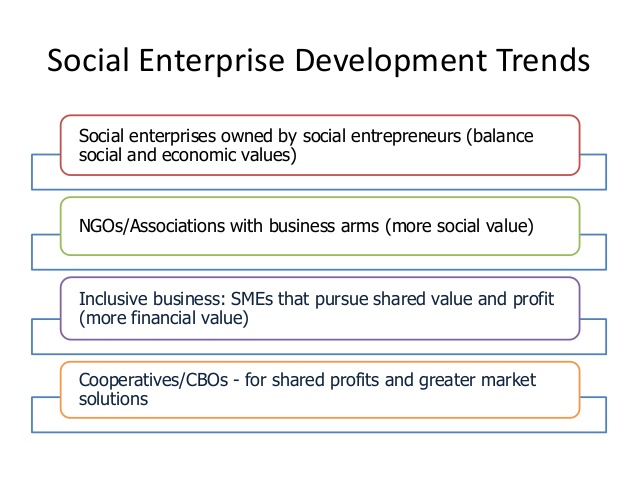
It is not difficult to say that there are many issues related to the definition, context and policies of the government in the analysis of social enterprises in Vietnam. Social enterprise is described as one of the special organizations with business activities associated with social objectives.

(Source: Ms. Pham Kieu Oanh, Social Investment in Viet Nam, 2014)

In particular, the profit source of the business is used to reinvest the community, rather than maximizing profits for shareholders or owners. In this country, there are three important historical periods divided, which includes Before 1986, from 1986 to 2010 and from 2010 to date. Different periods of history have led to the different activities and development of social enterprises. In addition, the authors also focus on the difficulties and challenges of social enterprises to adapt to the development of modern society in Vietnam. Recommendations have also been made to create useful premises and suggestions for the long-term development of social enterprises.

Reference lists: 

  1. Article: https://www.britishcouncil.vn/sites/default/files/social-enterprise-in-vietnam-concept-context-policies.pdf
  2. Pham Kieu Oanh, Centre for Social Initiatives Promotion, 2014, Social Investment in Vietnam, Published in: Small Business & Entrepreneurship

ANCIENT HANOI – ART CITY

Writer: Tran Thi Thu Trang – No.19

ANCIENT HANOI – ART CITY

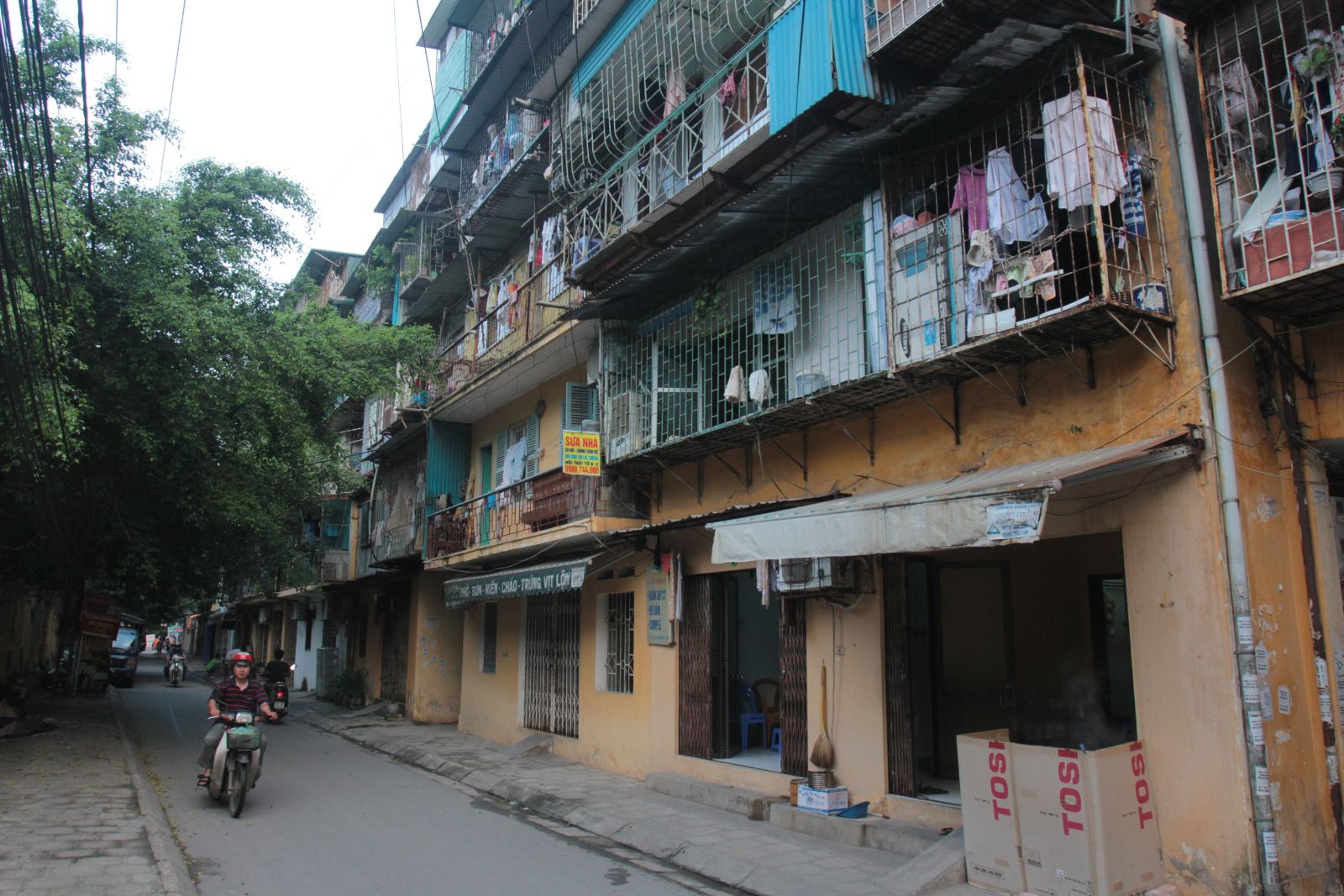
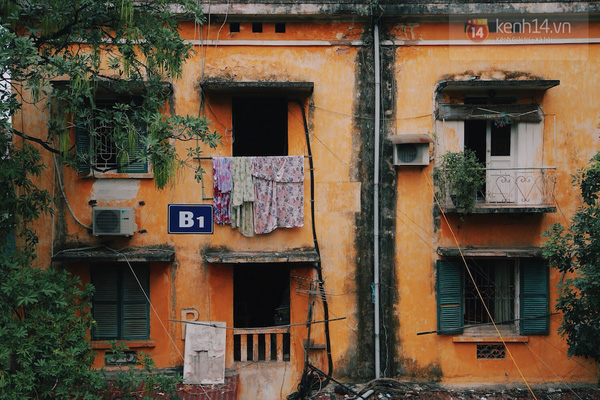
Hanoi – the capital of Vietnam and the country’s second largest city by population. Hanoi is known for its ancient houses which were built at the late of the 20th century, intact with typical architecture, especially on Hanoi streets. The traditional trade villages and old streets are ancient beauty of the “unique” Hanoi, however, the image of old collective zones/blocks/houses, on the other hand brings negative look for the local community and foreigners as well.

Source: https://www.chotot.com/kinhnghiem/kinh-nghiem-mua-nha-tap-the-cu-de-hieu-qua-va-thoa-dung.html

Processed with VSCOcam with c6 preset

Source: http://kenh14.vn/doi-song/khu-tap-the-cu-nhung-hinh-anh-than-thuong-toi-do-nhin-la-nho-den-ha-noi-20150123030142237.chn

With the aim to give a new look for Hanoi but still keeps its ancient architecture as a traditional value, and to set up a playing-ground for the free young artists to share their talent and enthusiastism to the community,  these artists with the support from local authorities and some organizations started painting colorful murals on the old walls of the towns/villages in Hanoi, on a specific subject. Over the past years, walls and fences of the selected areas were covers with lively and bright pictures such as animals, characters of fairy tails, … or to express the history of the local itself.

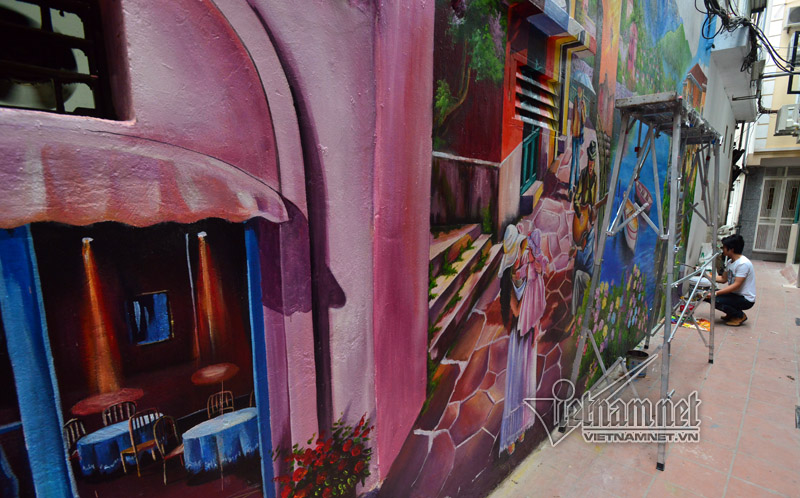
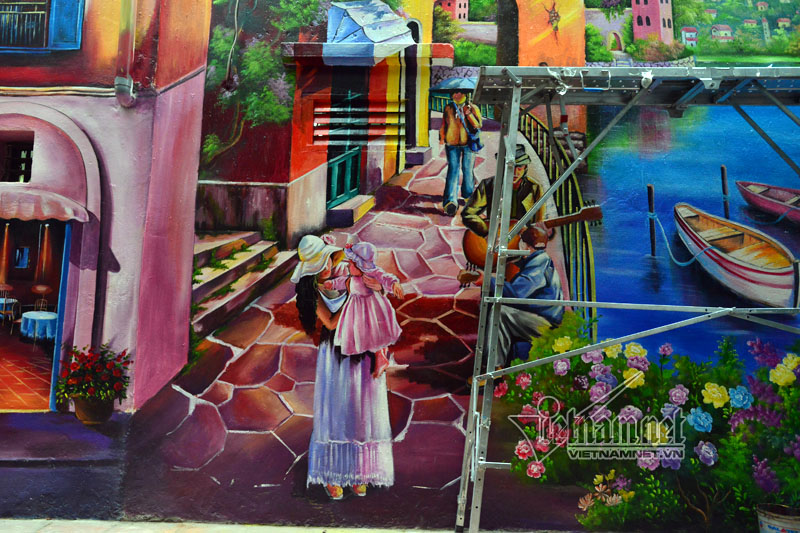
The pioneer should be mural painting of a romantic Venice city, gently covered the wall in the alley on Yen Phu street in the centre area of Hanoi by a small group of young artists firstly being invited a family in the town for drawing a landscape on their house’s wall. However, everyone were so impressed with the beautiful pictures which made the small rough alley become more colorful, more alive that all the neighbors decided to ask for drawing all the rest walls.

Source: http://vietnamnet.vn/vn/doi-song/du-lich/ngo-nho-cu-ky-o-ha-thanh-dep-lung-linh-nho-tranh-3d-373709.html

Moving with the same activities but in others areas in Hanoi, we can see the appearance of the Central Women’s Collective on Phao Dai Lang street in Dong Da ward, Hanoi is also completely changed with the pictures of Vietnamese villages, trains … reminiscent of the old memory of Hanoi being painted. The old walls made many people so surprised and memoriable. The paintings are the result of a community project called Arts build communities conducted by young artists from Ho Chi Minh city  coming to Hanoi for design, especially the architect Ta Thi Thu Huong and artist Nguyen Thanh Tuyen, director of the painting company for the main theme. This project has been on process since Novemer, 2017 and expected to complete with total of over 20 pictures in overall.

Source: http://petrotimes.vn/khu-tap-the-dep-ngo-ngang-voi-tranh-bich-hoa-501613.html

In the coming time, the local authorities need to take measures to raise public awareness in protecting the art works as well the enviroment when more and more tourists visits these villages, also to support the artists to encourage their talents and spirits, to give the others areas in Hanoi a new look.

Transformation of Vietnam with development of big business: Vingroup

Transformation of Vietnam is reflected clearly with the development of big business companies. For example, VINGROUP is one of corporation that using a lot of foreign investment in order to buy lands in Vietnam. About 10 years ago, with a good far seeing, VINGROUP has built up many high building for housing and shopping center in Hanoi. After that, this group opened a chain of retail supermarkets to attracted many consumers and made them getting closer with VINMART trade name. Now, there are a lot of  Vin member companies operating so successfully in term of health field, ecommerce, resorts, entertainment, real state, so on. There is no denying that the developing of VINGROUP had created so many jobs for labors, increased the living standards for Vietnamese, and helped the Vietnam economy getting more and more growth up till now.

Writer: Nguyen Mai Huong (number 09)

https://smartcity.vinhomes.villas/bds-vinhomes-phat-trien-ben-vung-nho-chu-tin/http://bietthuvinpearls.net/vingroup-phat-trien-he-thong-trung-tam-thuong-mai-vincom/

Vietnam, transformation for development

Vietnam has potential characteristics for reforming and successful development. It has experienced a long impressive history that impacted the transformation the internal economic.  In 1986, champagne called “DOIMOI” had known when Vietnam changed from a centrally planned to market economy. At that time, the rate of poverty has reduced significantly. The changing also was proven in success of agricultural, as well as in issuing a lot of comfortable business conditions.  By 2007, GDP growth was taken consider when Vietnam joining WTO, and it got a huge flow of FDI. Even though, Vietnam has overcame difficulty as the inflation has reached 23% by 2011, then the government needed to intervene for stabilization. After that, Vietnam has shown that the potential development when join ASEAN and TPP, and it is expected to earn some additional GPP growth.

There is some recognition for Vietnam, detailed it ranked 78 out of 189 countries in World Bank report for ease of doing business. Moreover, in World Economic Forum’s Global Competitiveness Index for 2014-2015, Vietnam continued to rank 68 out of 144 countries.

Nowadays, it is time for Vietnam to face with so many challenge. That it need to transform from “a low –wage economy to one that comprises a highly skilled, well-trained and sophisticated labor force”.  So, we really optimistic for the developing prospect of Vietnam. However, it will take a support from the government to make the bright and advantage future for economic.

Resource:

http://ink.library.smu.edu.sg/cgi/viewcontent.cgi?article=1022&context=ami

Writer: Nguyen Mai Huong (number 09)